

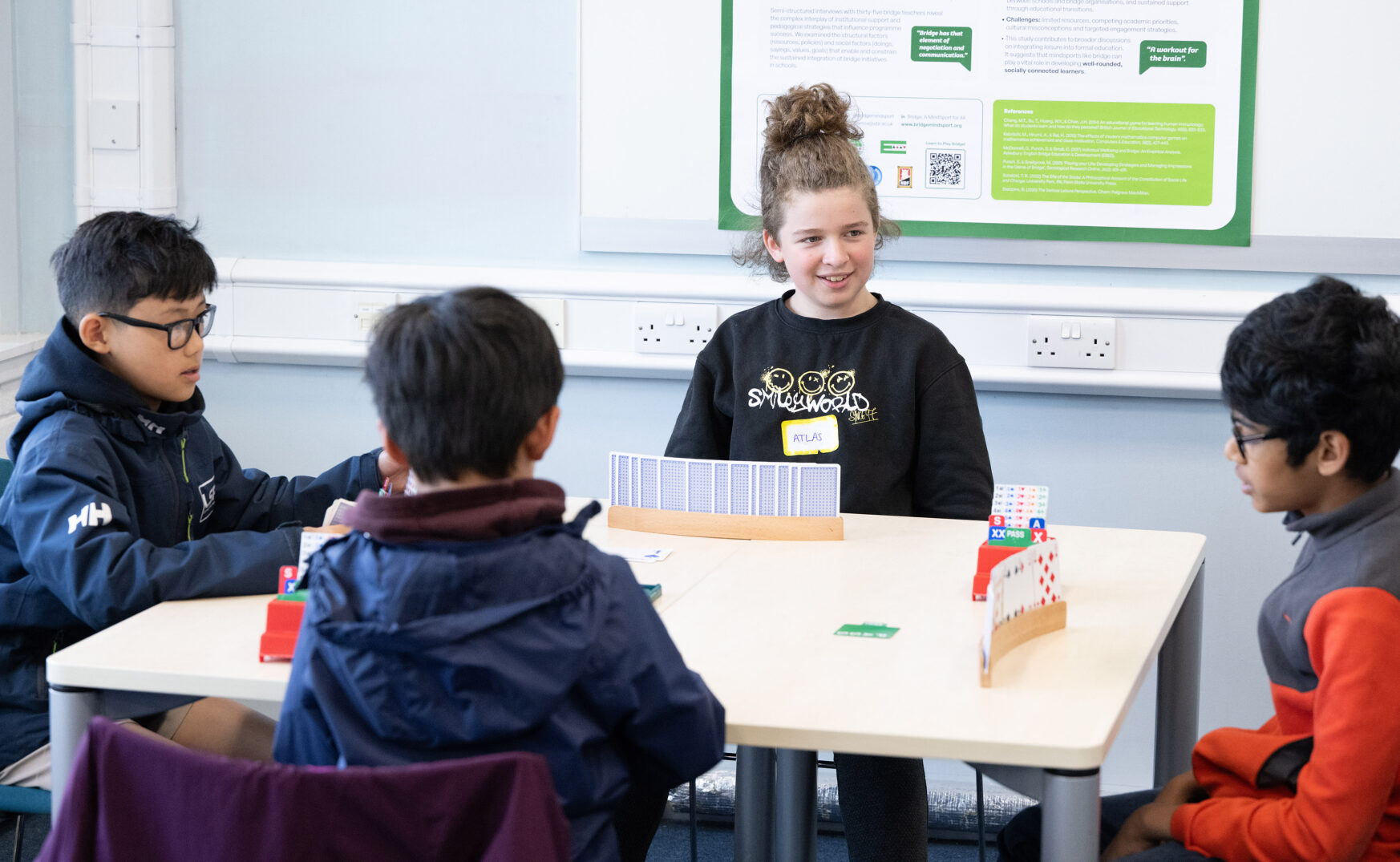
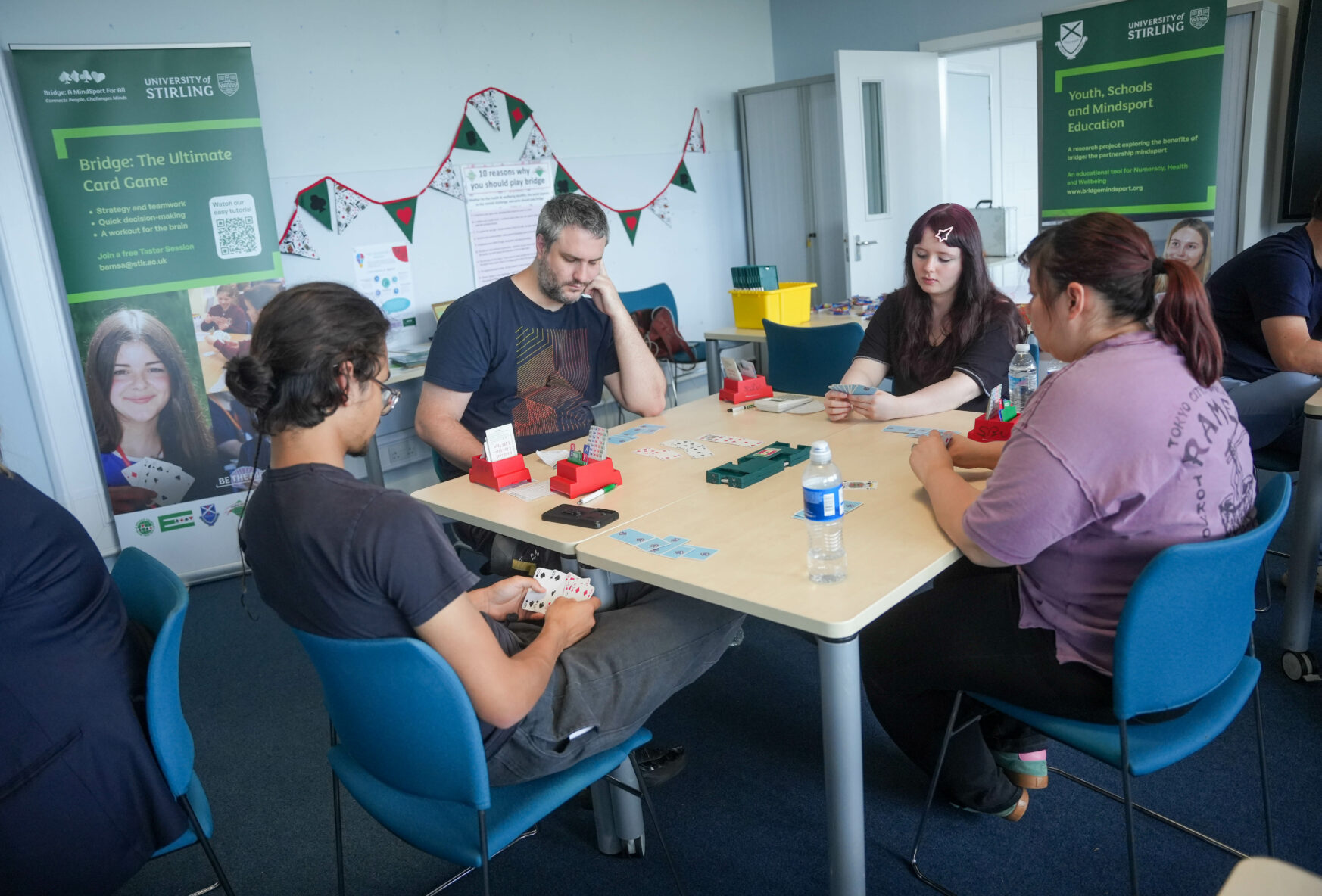
Young people navigate five key progressions and three critical transitions that shape their development as bridge players.
This is a key insight from BAMSA’s new report on youth transitions, which interrogates the factors underpinning the continuity and discontinuity of bridge trajectories across the life course.
Drawing on interviews with forty young bridge players aged 13 to 31 and eight bridge teachers in Scotland and England, the study suggests that drop-out is usually driven not by a loss of interest in bridge, but by logistical mismatches.
On the one hand, players retain a strong sense of identity as bridge players even during periods of absence, expressing fondness for the game and an intention to return. On the other hand, work and family obligations compete with bridge as a form of serious leisure. There is a need for more evening and weekend games and more casual formats of play to suit young players’ availability and preferences.
A central contribution of the report is its identification of five progressions within bridge journeys:
(1) From casual play to serious leisure
(2) From supervised to independent play
(3) From playing non-competitively to competing in local, regional, and national tournaments
(4) From playing with different partners to strategising with a regular partner
(5) From conscious thought to intuitive play.
These progressions offer a useful framework for understanding the developmental arc of bridge players and offering tailored support. The report also traces players’ engagement across three life stages: (1) childhood; (2) adulthood; (3) later life.
Read the full report for five evidence-based recommendations on supporting youth transitions in bridge, which emphasise the crucial role of social networks:
Full Report: Young people’s bridge journeys and transitions